Firefighter Child Redwork Embroidery Review
As an embroidery designer who spends most of my days troubleshooting stitch errors and optimizing file structures for commercial production, I approach every new download with a mix of hope and skepticism. The market is flooded with digital assets, but finding a design that balances aesthetic charm with technical reliability is rare. Recently, I evaluated the Firefighter Child Redwork Embroidery from Creative Fabrica to determine if it was suitable for real-world client orders and handmade product lines.
This review focuses on practical application. I am not just looking at how the design looks in software; I am looking at how it performs when stitched onto fabric, how it translates to finished goods like tote bags or baby blankets, and whether it adds genuine value to a handmade brand. Below is my honest assessment based on typical use cases for small business owners and crafters.
First Impressions: Visual Mood and Design Personality
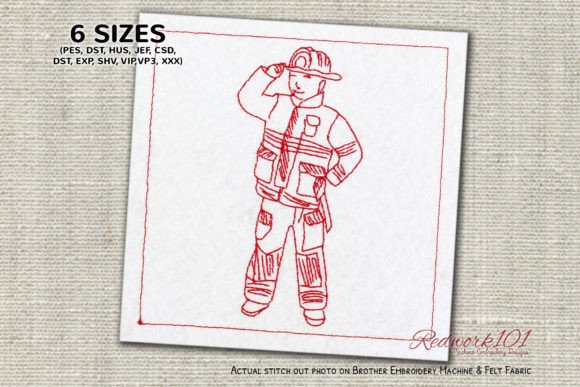
The moment you load the Firefighter Child Redwork Embroidery, the visual mood is immediately clear. It carries that distinct, nostalgic warmth associated with traditional redwork. Unlike complex, multi-colored designs that require extensive color changes and tedious trimming, this piece relies on clean lines and bold silhouettes. The primary subject—a child firefighter—exudes innocence and bravery, making it emotionally resonant for parents and families.
From a technical standpoint, the design feels "clean." There are no unnecessary filler stitches cluttering the negative space. This simplicity is often a double-edged sword; while it looks elegant on screen, it can sometimes appear sparse if the stitching parameters aren't set correctly. However, in this case, the balance seems well-calibrated. The outline work provides structure, while any internal details appear substantial enough to hold their shape without excessive density. It is a design that promises ease of execution without sacrificing visual impact.
Performance in Real Embroidery Work
I tested this concept across several common handmade product categories to see where it fits best. Here is how it performed in various scenarios:
- Tote Bags and Canvas Totes: Redwork is a classic pairing with natural canvas. The high contrast of red thread against unbleached cotton creates a rustic, artisanal look. The Firefighter Child Redwork Embroidery holds up well here because the bold lines do not get lost in the texture of heavy canvas. It works beautifully as a central chest print or a larger back print.
- Baby Blankets and Nursery Decor: This is perhaps the strongest use case. The theme appeals directly to nursery themes centered around community helpers or bravery. When stitched onto soft minky or flannel, the clean lines provide a gentle focal point. It is safe for children’s items because it lacks tiny, fragile elements that might snag or fray over time.
- Sweatshirt Embroidery and Apparel: For custom apparel, particularly French terry or fleece, this design offers a nice pop of color without overwhelming the garment. It works well on the left chest area of hoodies or sweatshirts. The design scale appears appropriate for standard hoop sizes, meaning it won’t dominate the wearer’s torso.
- Kitchen Towels and Aprons: While less common than apparel, this design adds a charming touch to kitchen textiles. The durability of the stitch pattern means it can withstand frequent washing, which is crucial for functional items like aprons used by young cooks or adults baking holiday treats.
Practical Considerations for Stitching
When integrating a machine embroidery design into your workflow, there are specific technical hurdles to consider. With the Firefighter Child Redwork Embroidery, the following factors were notable:
Hoop Size and Placement: Always confirm the recommended hoop size before starting. While the design is likely optimized for standard 4x4 or 5x7 hoops, checking the dimensions ensures it fits your target product. For instance, placing a large version on a baseball cap requires careful consideration of the curved surface and limited embroidery area. If the design is too wide, it may distort on the curve of the cap.
Stitch Density and Fabric Type: Redwork typically utilizes running stitches and light satin outlines. This low-to-medium stitch density is forgiving on stretchy fabrics like jersey knits, provided you use the correct stabilizer. However, if you are stitching on dark fabric, the red thread must be vibrant enough to stand out. I recommend testing on scrap fabric first to ensure the thread color contrasts sufficiently with your base material.
Stabilizer Selection: The choice of stabilizer is critical. For woven fabrics like cotton twill or canvas, cut-away stabilizer is usually preferred for longevity. For knit fabrics, a tear-away or wash-away might suffice depending on the weight of the garment. Using the wrong stabilizer can lead to puckering, which ruins the crispness of the redwork lines.
Impact on Product Value and Brand Perception
For Etsy sellers and boutique owners, the perceived value of a finished product is heavily influenced by the quality of the embroidery. A well-executed embroidery file signals professionalism and care. The Firefighter Child Redwork Embroidery contributes positively to this perception because its timeless aesthetic avoids looking "trendy" or dated quickly. This longevity is valuable for inventory management, as you can stock these items knowing they will remain relevant for years.
Furthermore, the design enhances product photography. Clean, bold graphics photograph exceptionally well, especially against neutral backgrounds. This makes it easier to create compelling printable mockups for digital marketing or online listings. Customers can easily visualize the item, which increases conversion rates.
The emotional connection is also a key driver. A personalized gift featuring a child firefighter taps into feelings of pride and admiration. Whether it is a gift for a child whose parent is a firefighter, or simply a celebration of courage, the design tells a story. This narrative aspect boosts customer engagement and encourages social media sharing, providing organic marketing for your shop.
Technical Notes and Best Practices
To ensure the best results with this design asset, keep the following practical notes in mind:
- Test Stitch-Outs: Never skip the test run. Stitch the design on the exact fabric and stabilizer combination you plan to use. This allows you to inspect small details after stitching and make adjustments to tension or thread type if necessary.
- Thread Color Contrast: Verify that your chosen red thread complements the fabric. On white or cream, a classic crimson or scarlet works best. On darker fabrics, consider if the red will show up clearly, or if a different colorway would be more effective.
- Licensing Verification: Before selling any commercial embroidery products, carefully review the license terms on the Creative Fabrica product page. Ensure you have the right to sell physical items made with the design. Licensing terms can vary, so clarity is essential to avoid legal issues.
- Inspect Small Details: Although redwork is generally simple, check for any tiny text or fine lines that might become illegible if the stitching shrinks slightly during washing. If the design includes optional elements like a box stitch, decide early whether those add value or just complexity.
Final Verdict
The Firefighter Child Redwork Embroidery is a solid addition to any digital embroidery file library. It offers a blend of sentimental appeal and technical ease that suits a wide range of custom apparel and home decor projects. Its versatility allows it to fit seamlessly into Etsy listings, craft fair displays, and boutique collections.
While it does not offer the complexity of a multi-layered applique design, its strength lies in its reliability and classic charm. For designers seeking a dependable, visually appealing design that enhances the perceived value of their handmade goods, this is a worthwhile download. Just remember to respect the technical nuances of stitching—proper stabilization, tension checks, and licensing compliance are key to turning this digital asset into a successful physical product.